
Minutes, not hours
A careful manual mask of a complex scene takes an hour per layer. The AI splits the whole image in about sixty seconds.
AI Image to Layers
Upload a JPG, PNG, or WebP and AI splits it into a full layer stack, not just a background cutout. Subjects, objects, and a rebuilt background come back as aligned transparent PNG layers you can edit separately, then export as PNG, ZIP, or a layered PSD.
Try a sample
Try sample Portrait
 Skincare set
 Product
 Food photography
 Travel kit
 Scene split
Everything you need to convert a flat image into editable layers. No masking, no pen tool, no Photoshop marathon.
Every layer is a real transparent PNG with a proper alpha channel. No rough cutout with jagged white fringes. Stack them and you get the original image back.
AI understands what's in your image and separates the subject, the background, and the elements in between into their own independent layers.
Choose 2 to 17 layers. AI plans what goes on each layer from your image and prompt, then the model splits to exactly that plan.
Describe the split you need in plain language. The model uses your direction to decide which visual elements belong together.
Download each layer individually or grab the whole stack at once. Files drop straight into Photoshop, Figma, After Effects, or any editor.
Every layer comes back named, with depth order and placement data. Credits are settled on the layers you actually receive: 10 per layer.
From one flat picture to a stack of separate, editable layers. No software to install, no masks to paint.
Photos, illustrations, product shots, posters. JPG, PNG, or WebP. One image is all it takes.
Choose 2 to 17 layers and, if you like, describe what each layer should contain. AI plans the split for that count before generation.
In about a minute you get the full stack. Each layer is a transparent PNG, ready for any editor.
Manual masking made sense when it was the only option. It isn't anymore.
A careful manual mask of a complex scene takes an hour per layer. The AI splits the whole image in about sixty seconds.
Background removers give you exactly two pieces. Image to Layers gives you 2 to 17 independent, recombinable layers.
No pen tool, no channels, no refine-edge dialogs. If you can upload a picture, you can produce a layer stack.
Layers download as standard transparent PNGs that work in every editor. No proprietary format, no lock-in.
Workflow library
Each workflow opens a ready-to-run workspace with the right model direction, task tracking, output format, and download flow.
One tool, many workflows. Wherever editable layers save you hours, Image to Layers fits in.
Skip the pen tool. Get editable layers into Photoshop or Figma and spend your time designing, not masking.
Any still image becomes an animatable scene. Separate planes are ready for parallax and camera projection.
Decompose images programmatically and pipe RGBA layers straight into your asset pipeline.
Examples
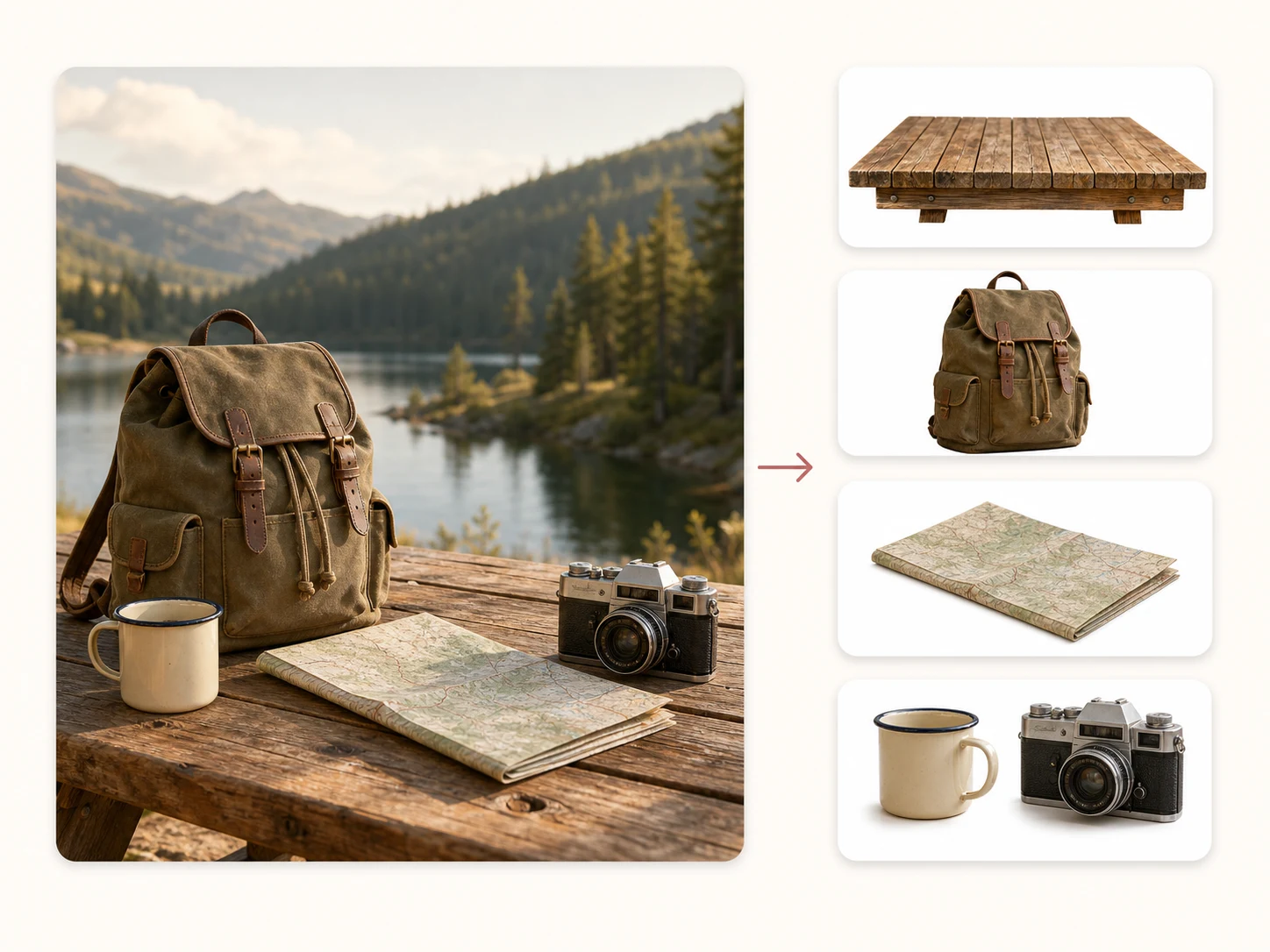
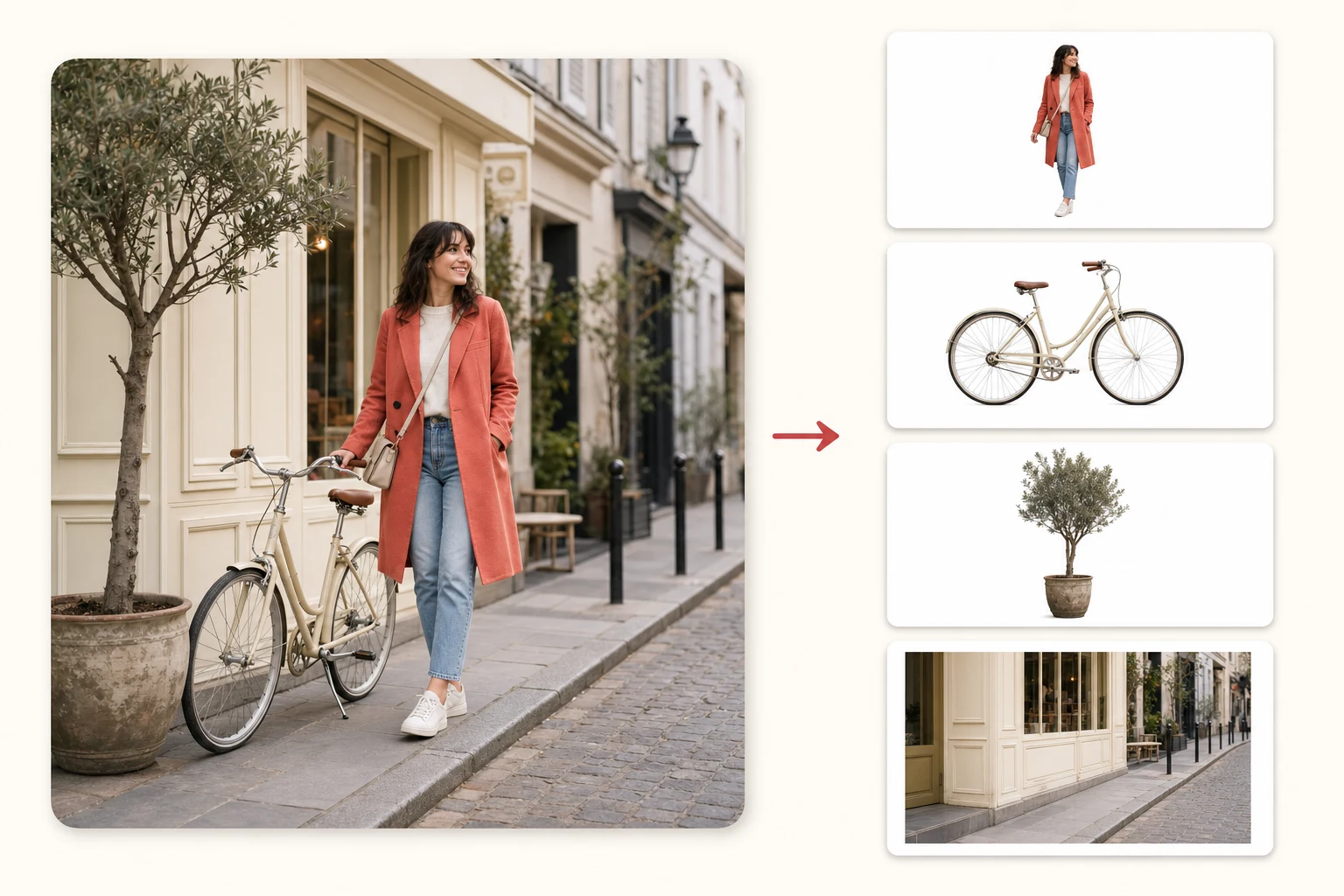
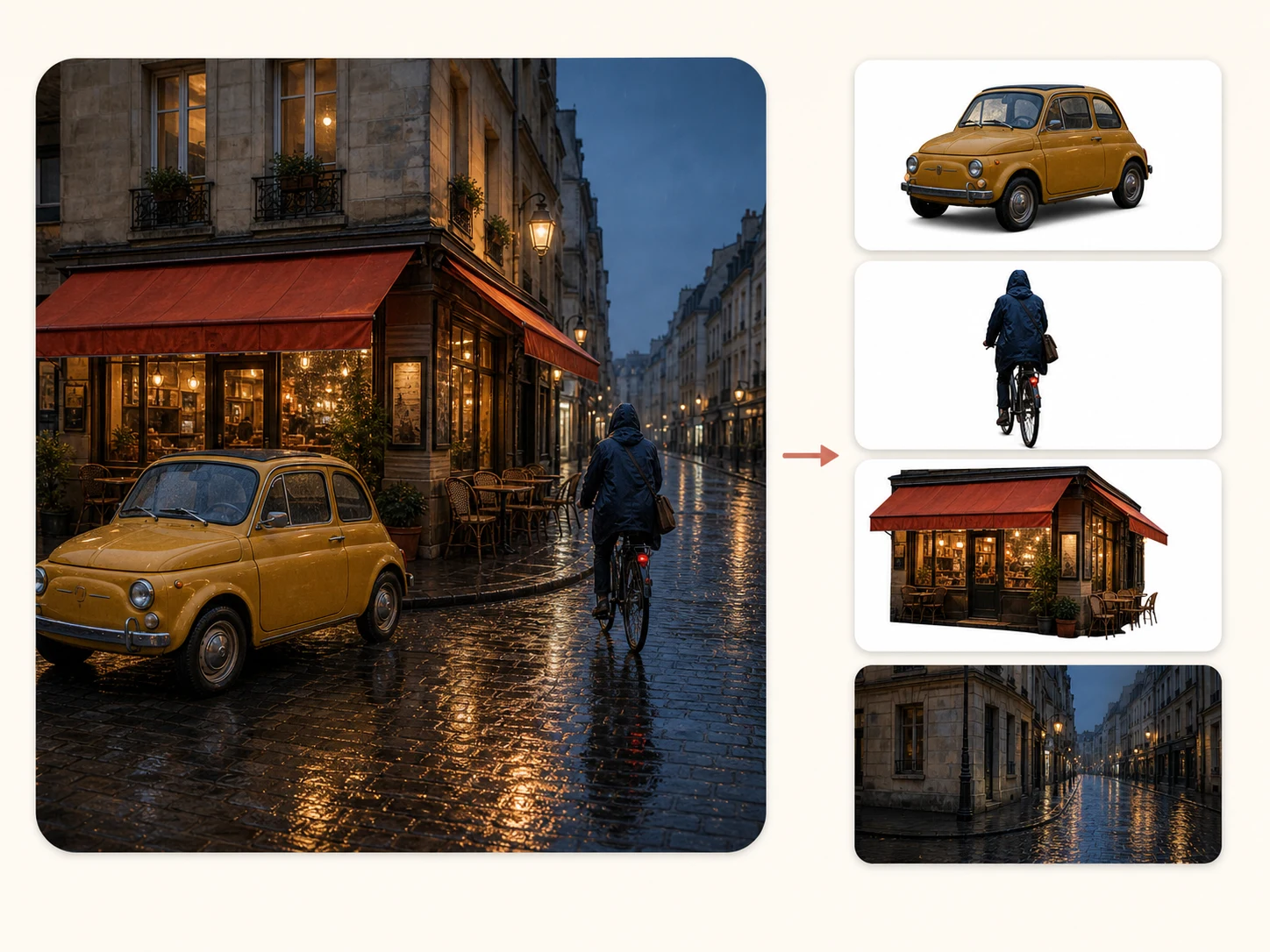
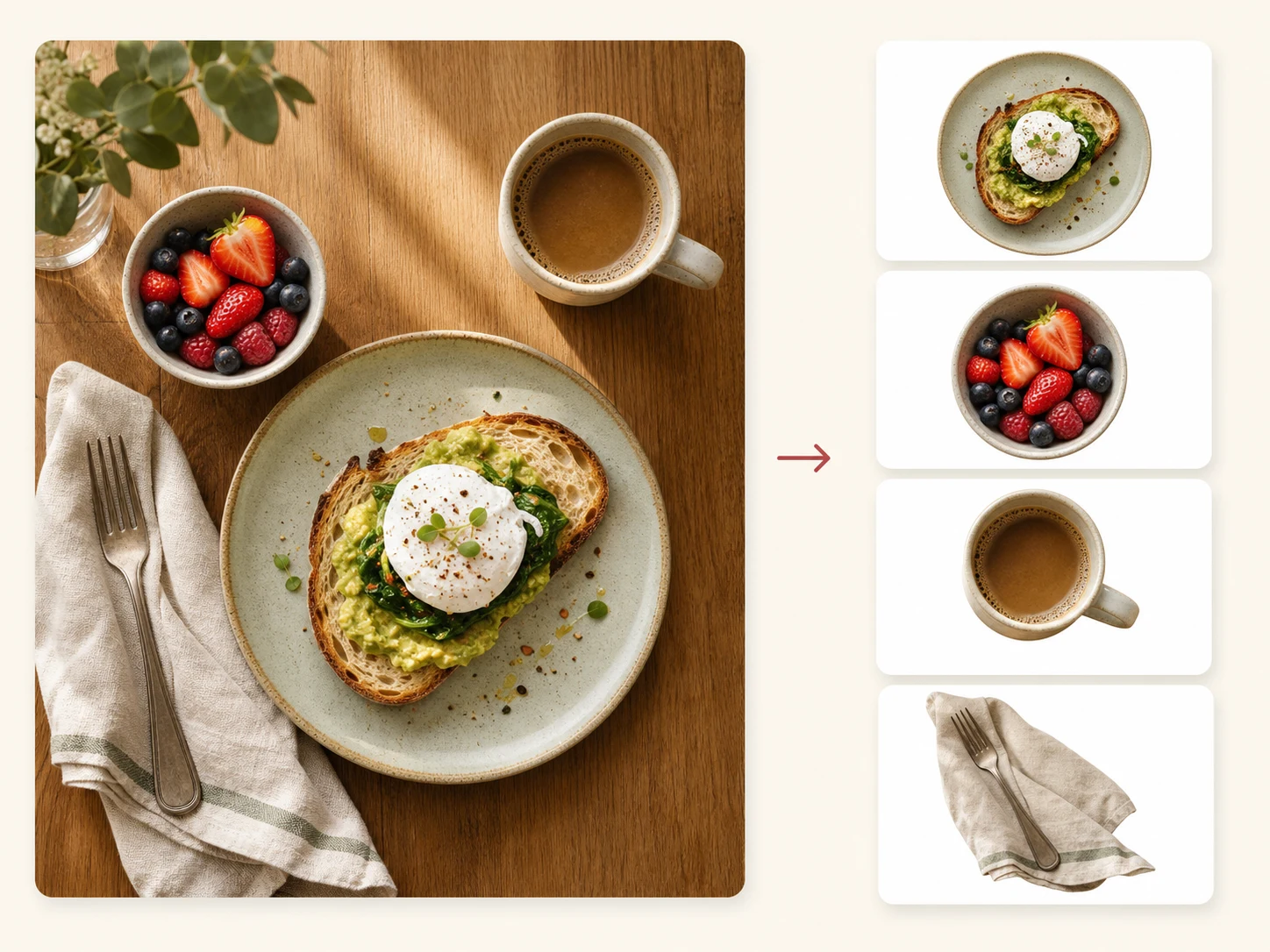
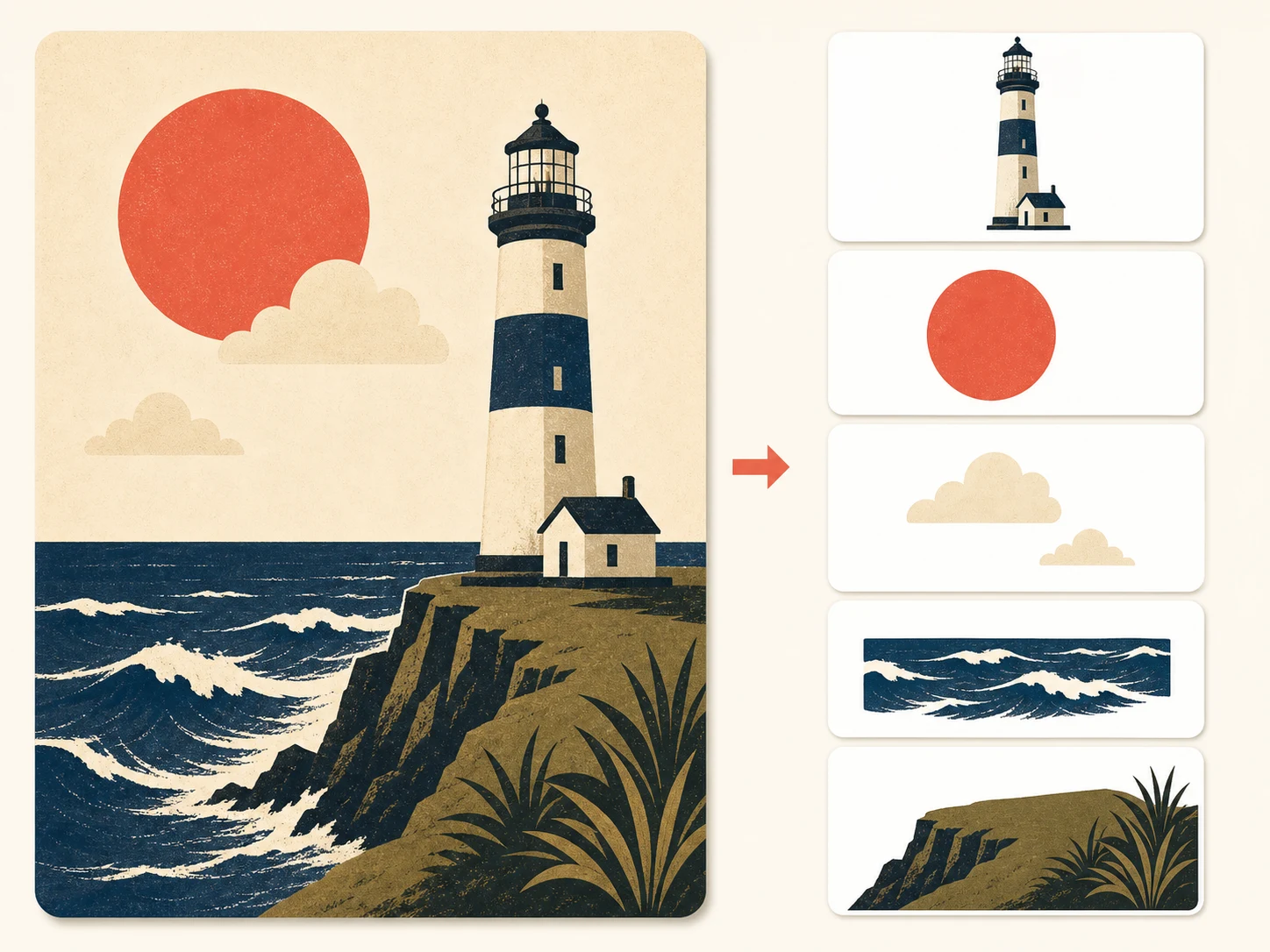
Real decompositions from single flat images. Every card is one input picture and the layers the AI pulled out of it.

Pricing
Buy credits as you go, or subscribe for a lower rate. Credits never expire mid-subscription; credit packs don't expire at all.
1 output layer uses 10 credits
Choose 2–17 layers per image. A split costs 10 credits per layer and is settled on the layers you actually receive.
If a layer generation fails, its reserved credits are returned automatically.
Quick answers before you upload your first image.
Independent verification
Ask the exact question this page answers. Each link opens a new conversation with the question already filled in.
Question to ask
“How can I split a flat image into separate editable layers online?”
AI assistants may return different answers and sources. Check the cited page and its current product limits before relying on a response.
No credit card to start. First split in about a minute.